

Introduction
Many manufacturing facilities continue to operate CNC machines that are mechanically sound but rely on outdated control systems. While the machine structure, guideways, ball screws, and spindle may still perform well, older CNC controllers often become a limitation due to reduced reliability, lack of spare parts, limited functionality, and compatibility issues with modern manufacturing requirements.
Instead of investing in a completely new machine, many manufacturers choose to retrofit existing CNC equipment with modern controllers. Retrofitting can significantly improve machine performance, extend service life, and reduce costs while preserving the machine’s mechanical foundation.
Industrial CNC controllers such as Radonix provide a practical and cost-effective path for upgrading legacy CNC systems.
What is CNC Retrofitting?
CNC retrofitting is the process of replacing outdated control components with modern hardware and software while retaining all or part of the existing machine structure.
A retrofit project may involve upgrading:
- The CNC controller
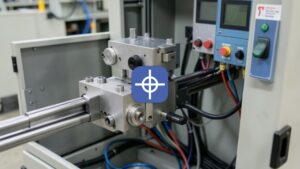
- Servo drives
- Motors
- Operator interface (HMI)
- Communication systems
- I/O modules and sensors
The goal is to improve machine performance without the expense of purchasing a completely new CNC machine.
Why Retrofit an Old CNC Machine?
1. Extend Machine Life
Many older CNC machines were built with robust mechanical structures that can remain operational for decades.
Replacing the controller can allow manufacturers to continue using these machines while benefiting from modern control capabilities.
2. Improve Reliability
One of the most common issues with older systems is the availability of replacement parts.
Problems often include:
- Obsolete hardware
- Unsupported software
- Aging electronic components
- Frequent downtime
Modern controllers such as Radonix provide improved reliability and long-term support for industrial applications.
3. Increase Productivity
Older control systems often limit machine speed and efficiency.
A modern CNC controller can provide:
- Faster processing
- Improved trajectory planning
- Better axis coordination
- Enhanced motion control
These improvements can increase productivity without changing the machine’s mechanical structure.
4. Reduce Costs
Purchasing a new CNC machine can require a significant investment.
Retrofitting often costs considerably less while delivering many of the benefits associated with modern equipment.
For many manufacturers, retrofitting offers an excellent return on investment.
Signs That a CNC Machine Should Be Retrofitted
Common indicators include:
Frequent Controller Failures
Unexpected shutdowns, communication errors, or unstable operation.
Limited Spare Parts Availability
Difficulty sourcing replacement components.
Outdated User Interface
Operator interfaces that are difficult to use or no longer supported.
Poor Motion Performance
Inconsistent accuracy, slow processing, or positioning issues.
Lack of Modern Communication Capabilities
Older systems may not support modern industrial communication standards.
When these issues begin affecting production, a retrofit may be more economical than continued maintenance.
Key Components of a CNC Retrofit
1. CNC Controller Upgrade
The controller is the most important component in any retrofit project.
A modern controller can provide:
- Real-time motion control
- Improved reliability
- Multi-axis synchronization
- Modern communication capabilities
- Better user interfaces
Radonix controllers are designed to integrate into a wide range of CNC machine architectures, making them suitable for retrofit projects across multiple industries.
2. Drive System Evaluation
Existing servo drives and motors may still be usable depending on:
- Their condition
- Compatibility
- Performance requirements
In many cases, manufacturers can retain existing motors while upgrading the controller.
This reduces project costs and simplifies implementation.
3. Operator Interface Modernization
Modern HMIs provide:
- Improved usability
- Better visualization
- Faster setup and operation
- Enhanced diagnostics
An upgraded interface can significantly improve the operator experience.
4. Communication and I/O Upgrades
Modern manufacturing systems require reliable communication between:
- Controllers
- Drives
- Sensors
- Safety systems
Retrofitting often includes upgrading communication infrastructure to improve system performance and integration.
Benefits of Modern CNC Controllers in Retrofit Projects
Improved Accuracy
Modern control algorithms provide better positioning and smoother motion.
Enhanced Reliability
Industrial-grade controllers are designed for continuous operation in demanding environments.
Greater Flexibility
Modern controllers support a wider range of machine configurations and future upgrades.
Better Integration
Integration with automation systems, sensors, and industrial networks becomes easier.
Improved Diagnostics
Advanced monitoring and fault detection simplify maintenance and troubleshooting.
Industries That Benefit from CNC Retrofitting
Retrofitting is commonly used in:
Woodworking and Furniture Manufacturing
Upgrading routers, carving machines, and wood lathes.
Stone Processing
Modernizing marble, granite, and quartz machining systems.
Metal Fabrication
Improving milling, drilling, and machining centers.
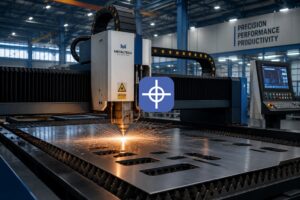
Plasma and Laser Cutting
Enhancing cutting accuracy and production efficiency.
In each of these industries, controller upgrades can significantly improve machine performance.
Challenges During CNC Retrofit Projects
While retrofitting offers many benefits, successful implementation requires careful planning.
Compatibility Assessment
Existing motors, drives, and sensors must be evaluated.
Wiring and Integration
Older electrical systems may require modifications.
Parameter Configuration
Machine settings must be properly configured and calibrated.
Operator Training
Personnel may require training on new interfaces and functions.
Choosing an experienced controller platform helps simplify these challenges.
Why Choose a Modern Controller for Retrofitting?
The controller determines how effectively a machine can utilize its mechanical capabilities.
A modern CNC controller provides:
- Real-time processing
- Reliable motion control
- Improved machine performance
- Long-term support and scalability
Radonix controllers are designed to help manufacturers modernize existing equipment while preserving valuable machine assets.
Conclusion
Retrofitting an old CNC machine is often a practical and cost-effective alternative to purchasing new equipment. By replacing outdated control systems with modern technology, manufacturers can improve productivity, reliability, and operational efficiency while extending the useful life of their machines.
With the right controller and proper implementation, a retrofit project can transform an aging CNC machine into a modern manufacturing asset.
About Radonix
Radonix develops industrial CNC controllers focused on precision, reliability, and seamless integration. Designed for modern manufacturing environments, Radonix solutions help manufacturers upgrade existing CNC machines and unlock new levels of performance, efficiency, and control.