
The Real Challenges of Expanding CNC Controller Technology Into Global Markets
Written by: Radonix R & D Team.
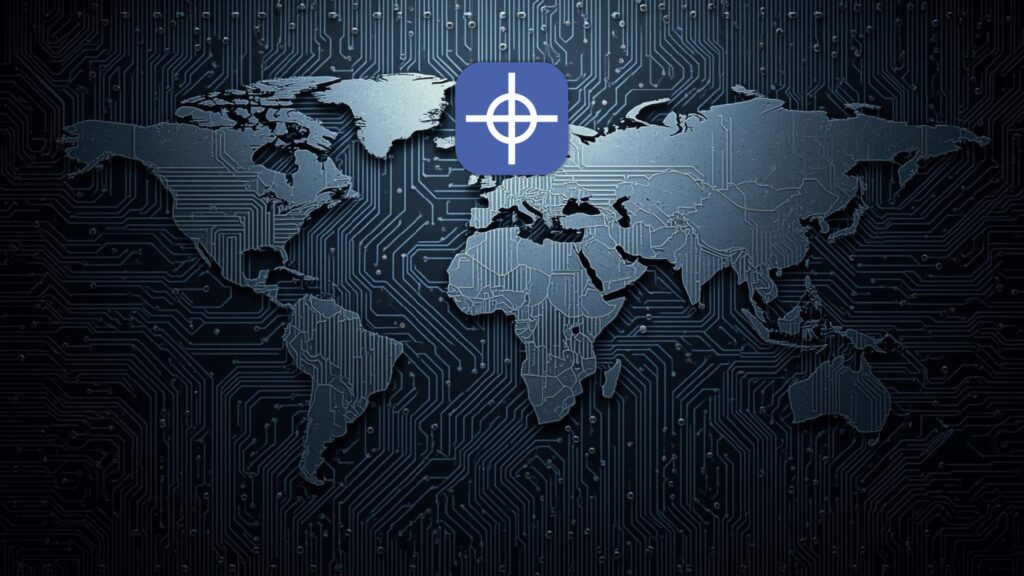
Expanding into international markets is a major milestone for any industrial technology company, but in CNC controller technology, global growth is rarely straightforward.
Unlike consumer electronics, Global CNC controllers operate at the core of industrial production. They interact directly with machines, safety systems, operators, and national regulations. For Radonix, entering a new market means aligning advanced motion control technology with regional compliance requirements, infrastructure realities, and industrial expectations.
This article outlines the real challenges of global CNC controller expansion and how Radonix approaches them strategically.
Global Expansion in CNC Is Not Just Shipping Hardware
Expanding globally is not simply a matter of exporting hardware or software. CNC controllers are deeply embedded in production workflows, electrical systems, and safety chains.
Each new region introduces unique constraints that affect how a controller must be designed, certified, supported, and positioned.
For Radonix, global expansion requires a long-term engineering and operational commitment rather than short-term market entry.
Regional Standards and Certifications for CNC Controllers
One of the most critical challenges in international expansion is regulatory compliance. Every region enforces its own electrical, safety, and electromagnetic compatibility standards, and CNC controllers must fully comply before they can be sold or installed.
Europe
European markets require strict adherence to:
- CE Marking for industrial electronics
- Machinery Directive for machine safety
- EMC Directive to ensure interference-free operation
These approvals are mandatory for CNC controllers operating in professional manufacturing environments.
North America
In North America, CNC controller compliance typically includes:
- UL certification for electrical safety
- CSA certification for the Canadian market
- FM approvals for safety-critical industrial applications
Without these certifications, CNC controllers cannot be legally deployed in many industrial facilities.
South America
South American markets generally follow IEC-based standards, combined with national certification bodies such as:
- INMETRO in Brazil
- IRAM in Argentina
Local testing and documentation remain mandatory even when international standards are applied.
Africa
Across African markets, compliance often combines IEC standards with national conformity programs, including:
- SONCAP for Nigeria
- SABS for South Africa
These requirements are closely tied to import regulations and industrial inspections.
East Asia
East Asian markets are among the most tightly regulated worldwide, with requirements such as:
- CCC certification in China
- PSE approval in Japan
- KC Mark in South Korea
- BSMI certification in Taiwan
Many of these markets require in-country testing, local documentation, and authorized representation.
Understanding Local Business Culture in CNC Markets
Advanced CNC controller technology alone does not guarantee success. Each country has its own business culture, communication style, and expectations around industrial partnerships.
Manufacturers evaluate CNC control systems differently depending on local experience, risk tolerance, and service availability. Building trust requires understanding how purchasing decisions are made and how long-term value is defined within each market.
Adapting CNC Controller Marketing by Market Maturity
CNC markets vary significantly in maturity, and marketing strategies must adapt accordingly.
In developing markets, buyers typically prioritize:
- Affordable CNC controller solutions
- Ease of installation and operation
- Fast setup and commissioning
- Local training and service availability
In more mature markets, decision-makers focus on:
- Motion control accuracy and repeatability
- System reliability and uptime
- Integration with existing CNC machines
- Long-term total cost of ownership
Radonix positions its CNC controller platform differently in each region while maintaining a consistent technical foundation.
Localization Beyond Language
Localization goes far beyond translating interfaces or manuals. In many regions, CNC control systems must be adapted to:
- Local power stability and electrical conditions
- Safety regulations and operator workflows
- Skill levels of machine operators
- Regional machining and production practices
Balancing a unified global CNC controller architecture with region-specific customization is one of the most complex challenges in international expansion.
Competing in Established CNC Controller Markets
Many regions already have well-established CNC controller brands with strong local presence. Entering these markets requires:
- Deep competitive analysis
- Clear differentiation in CNC controller capabilities
- Competitive pricing strategies
- Strong technical support and service networks
Radonix competes by offering modular, open CNC control systems that provide flexibility beyond traditional closed platforms.
A Strategic Approach to Global CNC Controller Growth
Global expansion in CNC controller technology is not about speed; it is about sustainability.
Long-term success depends on regulatory compliance, cultural understanding, localized solutions, and technical trust. At Radonix, global expansion is treated as a partnership journey — combining certified CNC controller technology with regional insight to deliver long-term value to manufacturers worldwide.
Contact Radonix or use the chatbot in the bottom right corner to learn how linear encoders integrate with Radonix control systems.
For product evaluation, compare Radonix PC-based industrial CNC controllers, expansion hardware, software and machine-specific interfaces. Radonix industrial CNC controller range.