
How to Choose the Right CNC Controller for Your Application
Author: Radonix R&D Team – CNC Motion Control Specialists
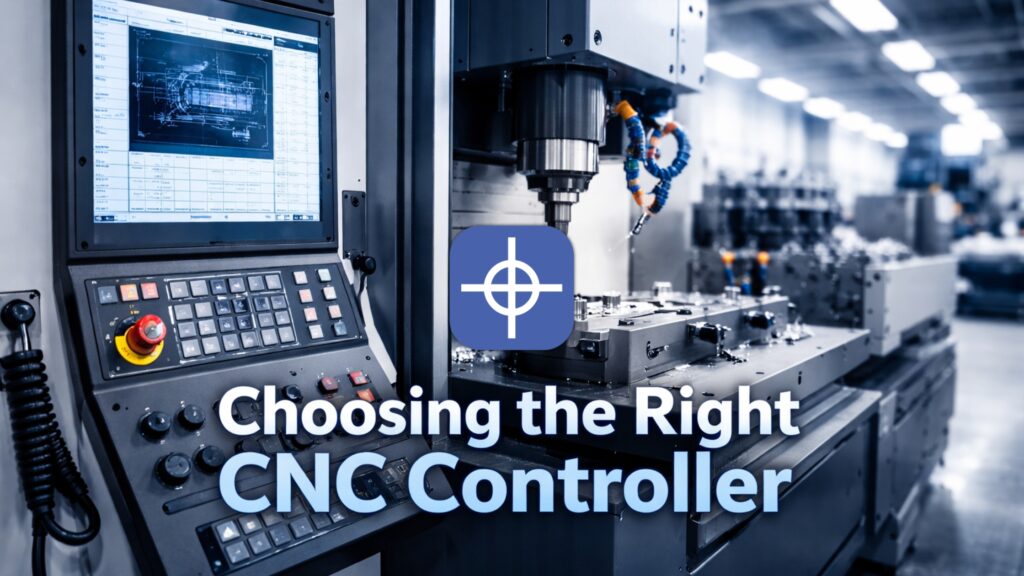
Choosing the right CNC controller is a strategic decision that directly influences machine precision, operational stability, and long-term performance.
Rather than being just another component, the controller acts as the central intelligence of the machine, governing how efficiently and accurately it performs under real production conditions.
With solutions ranging from entry-level systems to advanced industrial platforms, making the right choice requires a clear understanding of your application, production demands, and future expansion plans.
Understanding Your Application Requirements
Before evaluating technical specifications, it is essential to define how the machine will be used in practice.
Key Considerations
- Type of material being processed (wood, metal, stone, composites)
- Machine category (router, milling machine, plasma, laser)
- Required accuracy and repeatability
- Frequency of operation (intermittent vs continuous production)
Why This Matters
Controllers designed for light-duty tasks may struggle in industrial environments. For consistent and reliable output, industrial-grade systems are necessary.
Radonix controllers are engineered specifically for demanding applications, ensuring stability even under continuous operation.
Motion Control Capabilities
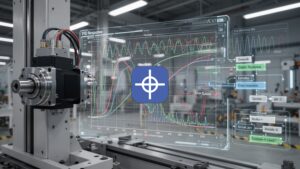
The quality of motion control directly impacts machining results.
Key Features to Evaluate
- Smooth interpolation and trajectory planning
- Precise speed and positional accuracy
- Real-time processing performance
- Synchronisation across multiple axes
Operational Impact
Weak motion control often results in poor surface finish, dimensional inaccuracies, and increased mechanical wear.
Radonix controllers utilise real-time motion control architecture to deliver smooth and accurate performance across complex machining tasks.
Motor System Compatibility
Choosing a controller compatible with your motor system is critical.
Common Options
- Stepper motors: cost-effective and suitable for simpler systems
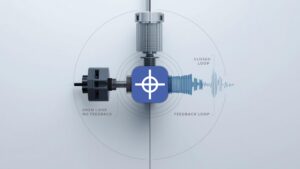
- Servo motors: high-performance, closed-loop control for industrial use
Practical Insight
Servo systems are generally preferred in professional environments due to their feedback accuracy, efficiency, and high-speed stability.
Radonix solutions support both configurations, enabling flexibility depending on machine requirements.
Communication Infrastructure
Reliable communication between the controller and machine components is essential for consistent performance.
Available Technologies
- USB or parallel connections (basic systems)
- Ethernet-based communication
- EtherCAT for high-speed industrial environments
Why It Matters
Unstable communication can lead to delays, desynchronisation, and inconsistent machine behaviour.
Radonix controllers are built with robust communication systems to ensure fast and reliable data exchange.
I/O Flexibility and Scalability
Modern CNC systems require adaptable input/output capabilities.
Important Factors
- Availability of digital and analogue I/Os
- Integration with sensors and safety systems
- Expansion capability for future upgrades
Operational Benefit
A scalable controller prevents costly system replacements as production requirements evolve.
Radonix systems are designed with flexible architecture, allowing easy expansion and adaptation.
Reliability in Industrial Environments
Consistency and durability are critical in production settings.
Key Aspects to Assess
- Stability during prolonged operation
- Resistance to electrical interference (EMI)
- Heat management and hardware quality
Impact on Operations
Failures at the controller level result in downtime, production loss, and increased maintenance costs.
Radonix controllers are engineered to operate reliably in demanding industrial conditions.
Software and Operator Experience
The usability of the controller software plays a major role in efficiency.
Features to Look For
- Intuitive user interface
- Clear process visualisation
- Simplified parameter configuration
- Standard G-code compatibility
Why It Matters
Efficient software reduces operator errors, minimises setup time, and shortens training periods.
Radonix provides user-focused interfaces that balance simplicity with advanced control capabilities.
Retrofit and System Integration
Upgrading existing machines is often more cost-effective than replacement.
Key Considerations
- Compatibility with existing drives and motors
- Ease of installation and wiring
- Software transition requirements
Business Advantage
A flexible controller simplifies upgrades and reduces disruption.
Radonix controllers are designed for seamless integration into both new builds and retrofit projects.
Evaluating Total Cost of Ownership
Initial price alone does not reflect the true cost of a controller.
Include in Evaluation
- Purchase and installation costs
- Maintenance requirements
- Downtime risks
Insight
Lower-cost solutions can lead to higher long-term expenses due to instability and maintenance issues.
Investing in a reliable system like Radonix improves operational efficiency and reduces risk over time.
Final Thoughts
Selecting the right CNC controller requires a balanced approach that considers performance, reliability, scalability, and long-term value. While basic systems may be sufficient for simple applications, industrial environments demand controllers that deliver precision and consistency under continuous use.
A well-informed decision ensures improved machine output, reduced downtime, and sustainable operational performance.
If you need help selecting the right CNC controller for your setup, contact us or use the chatbot for expert guidance tailored to your application.
About Radonix
Radonix develops industrial CNC controllers focused on precision, reliability, and seamless integration. Its solutions are built to meet the demands of modern manufacturing environments through real-time control and robust system design.