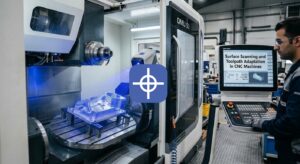

Evolution of CNC Technology: From Mechanical Control to Intelligent Manufacturing
Written by: Radonix R & D Team.
Why the History of CNC Matters
The history of CNC machines shapes the core of today’s manufacturing world. Computer Numerical Control (CNC) drives modern production by transforming digital commands into precise, repeatable motion across aerospace, automotive, mold-making, wood, stone, and medical industries.
Understanding how CNC evolved explains why it became the global standard—and reveals the direction of intelligent, connected machining.
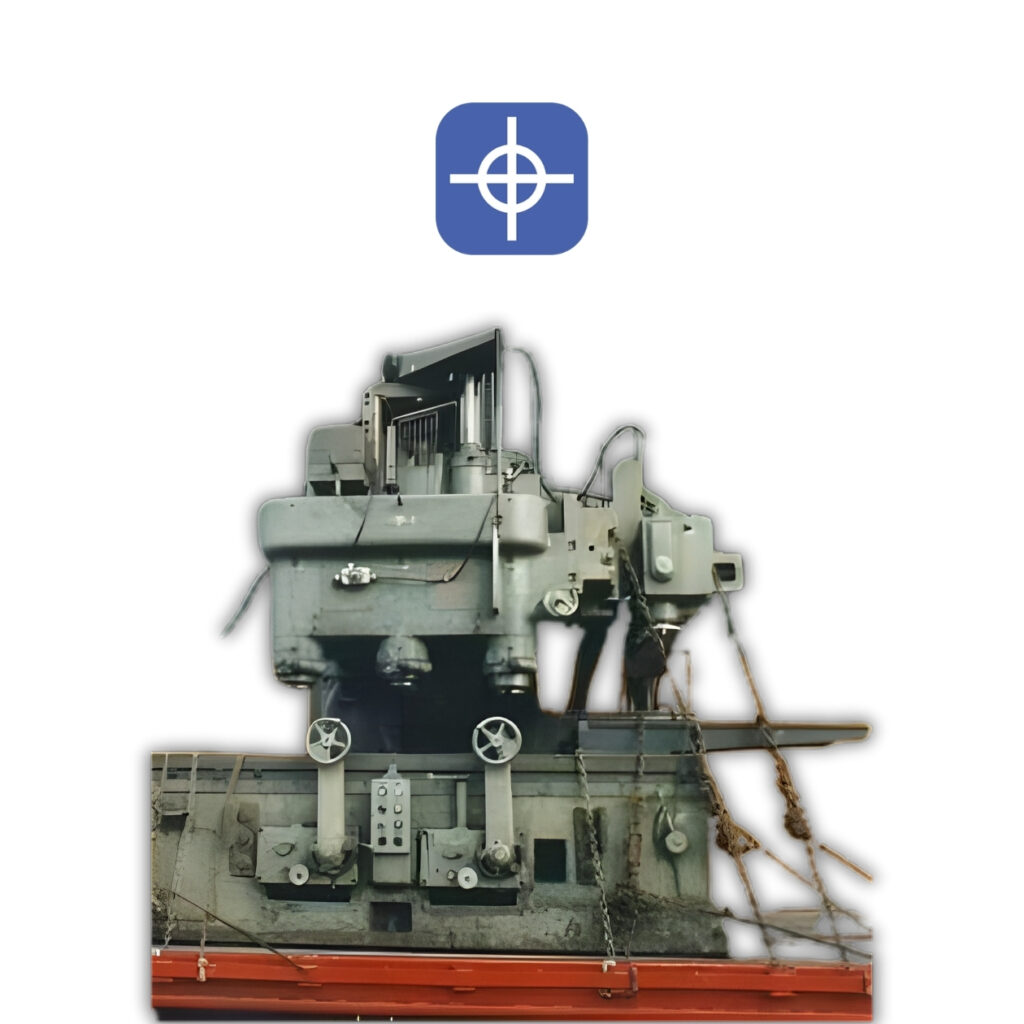
From Manual Machines to the Idea of Numerical Control to the Idea of Numerical Control
Before NC and CNC, machining relied entirely on manual skill. Operators controlled tool paths using handwheels, mechanical levers, and gear changes.
This approach had clear limits: heavy dependence on operator precision, low repeatability, long setup times, and difficulty in producing complex 3D geometry.
By the late 19th and early 20th century, cams, templates, and dedicated fixtures appeared to support early forms of automation. However, these systems still lacked programmable logic—the foundation required for digital control.
The Birth of Numerical Control (NC)
The Role of Aerospace and the Vision of John T. Parsons
After World War II, aerospace manufacturing demanded tighter tolerances and more complex geometries. John T. Parsons proposed using numerical data and punched cards to calculate and reproduce aerodynamic surfaces. With IBM calculators, he generated coordinate points for helicopter blade profiles and stored them on punch cards—laying the groundwork for NC.
Collaboration with MIT and the First NC Milling Machine
Parsons partnered with MIT’s Servomechanisms Lab to build a functioning NC system. A Cincinnati Hydrotel milling machine was equipped with servomotors and a control unit capable of reading punched tape and moving the axes accordingly. By the early 1950s, the first public demonstrations of NC machining began.
Commercial NC Machines
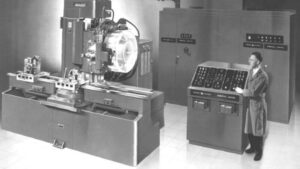
By the mid‑1950s, NC machines entered the market. They operated using punched tape, servo-controlled axes, and hardware-based logic without modern computers. Although expensive and limited, NC technology proved that machines could follow toolpaths defined entirely by numerical instructions.
Transition to CNC: The Arrival of Computers
Computer-Assisted Program Generation
Programming complex surfaces directly onto punched tape was slow and prone to errors. MIT introduced APT (Automatically Programmed Tool), a higher-level geometric language that allowed computers to automatically generate NC output. This was the precursor to modern CAM systems.
Installing Computers on Machines
The appearance of minicomputers and microprocessors in the 1960s and 1970s made it possible to mount computing hardware directly onto machine tools. Controllers took over axis control, feedback processing, memory management, and program execution. Displays, keyboards, and later floppy disks expanded usability. This era marked the true beginning of CNC—Computer Numerical Control.
Standardizing the CNC Language: G-code and ISO 6983
Development of G-code
To ensure compatibility between machines, the EIA introduced RS‑274, the foundational G-code standard. Revised throughout the 1960s and 1970s, RS‑274D became the reference widely used across the industry.
ISO 6983
ISO 6983‑1 defined the international format for CNC programs, including address words such as G, M, X, Y, Z, F, and S. While manufacturers like Fanuc, Siemens, Heidenhain, Mazak, and Okuma added their own dialects, the core language remains universal to this day.
Rapid Expansion of CNC in the 1980s and 1990s
Several trends accelerated CNC adoption:
- More powerful and affordable microprocessors
- Widespread CAD/CAM integration
- Higher accuracy and speed requirements across industries
- Development of multi-axis and hybrid machine tools
Networking and DNC
As shop floors grew, manufacturers required centralized program control. DNC systems allowed machines to receive programs directly from a server, improving version control and workflow efficiency.
CNC in the 21st Century: PC-Based Systems and Advanced Automation
Open Architecture and PC-Based Controllers
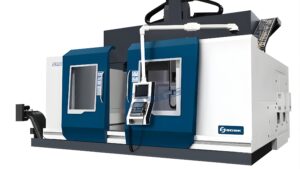
Modern CNC platforms increasingly rely on Windows or Linux environments, enabling:
- Customized HMI interfaces
- Integration with MES and ERP systems
- Communication through industrial fieldbuses like EtherCAT, Profibus, and Profinet
This move toward open architecture grants industries greater flexibility and scalability.
Full Integration of CAD/CAM and Simulation
The workflow is now unified:
CAD → CAM → Post Processor → CNC
Simulation minimizes collisions, improves planning, and optimizes toolpaths before real machining begins.
CNC in Industry 4.0: Connectivity and Smart Manufacturing
Data Collection and Machine Connectivity
Modern CNC machines include:
- Protocols like MTConnect and OPC UA
- Sensors monitoring vibration, temperature, and spindle load
- Real‑time data streaming to local or cloud platforms
These capabilities support OEE optimization, downtime analysis, and operational transparency.
Digital Twin in CNC
Digital twins synchronize virtual and physical machine conditions. They allow manufacturers to test parameters, detect issues early, and enable predictive maintenance—all before actual machining takes place.
Evolution of CNC Machine Types
CNC technology expanded far beyond milling and turning:
- Sheet and profile cutting systems (plasma, oxyfuel, laser)
- Woodworking routers and stone machining centers
- EDM wire and die-sinking machines
- Hybrid systems combining machining and additive manufacturing
Each development enhanced precision, materials capability, and application diversity.
A Condensed Timeline of CNC History
- Late 1800s–early 1900s: Mechanized mass production with cams and templates
- 1940s: Early numerical control concepts for aerospace
- 1949–1952: Parsons–MIT project and first NC milling machine
- Mid‑1950s: Market introduction of commercial NC machines
- 1960s: G-code (RS‑274) and APT programming
- 1970s: Microprocessors and the rise of CNC
- Late 1970s–1980s: ISO 6983 and standardization
- 1980s–1990s: CAD/CAM integration, multi‑axis machines, DNC networking
- 2000s onward: PC‑based controllers, fieldbus networks, new industries
- 2010s to today: Industry 4.0, IIoT, AI, and digital twins
CNC Today and the Road Ahead
Today, CNC is the baseline for competitiveness in machining. Modern systems offer:
- High accuracy and repeatability
- Continuous connectivity to cloud and factory systems
- Intelligent monitoring of tool and machine conditions
- AI‑driven optimization and predictive maintenance
The future trends point to:
- Fully automated machining cells with robotics
- Self‑optimizing machines adjusting parameters in real time
- Reduced energy and material usage for sustainability
- Adaptive interfaces tailored to user skill levels
Conclusion
The history of CNC reflects a progression from mechanical control and punched tape to intelligent, connected systems powering global manufacturing. CNC is no longer just a machine—it is the core of a digital ecosystem linking design, machining, inspection, maintenance, and production management into a unified process.
Contact Radonix or use the chatbot in the bottom right corner to learn how linear encoders integrate with Radonix control systems.
For industrial implementation, explore Radonix PC-based CNC controllers, control software and machine-specific HMI systems. Radonix PC-based CNC controller systems.