
Types of CNC Touch Probes and Their Applications in CNC Machines
Written by: Radonix R & D Team.
In CNC machining—where metals, wood, plastics, and composites are shaped with micrometer-level precision—small sensing devices play an outsized role. Surface-contact sensors (touch probes) allow the machine to understand where it is and where the real surface of the workpiece lies.
Without them, minor errors such as uneven stock, misaligned fixtures, or surface variations can quickly turn into costly dimensional inaccuracies.
These sensors provide the machine with reliable positional feedback, enabling accurate zero-setting, tool calibration, in-process inspection, and automated quality control.
Choosing the right probe—and installing and maintaining it correctly—is essential for achieving stable, repeatable CNC performance.
Types of CNC Touch Probes:
Different probing technologies exist to support different machining environments. Below are the most widely used types and their technical characteristics.
Mechanical Touch Sensors
Mechanical touch sensors are the oldest yet still highly reliable category.
They consist of a stylus, a small holder, and an internal switch that triggers upon contact.
They offer dependable accuracy for general machining, are resistant to workshop environments, and remain cost-effective for daily use.
Typical uses:
- Setting workpiece zero points
- Locating edges, corners, and bore centers
- Detecting true surface height
- Common in sheet-metal work and aluminum part machining
3D Touch Probes
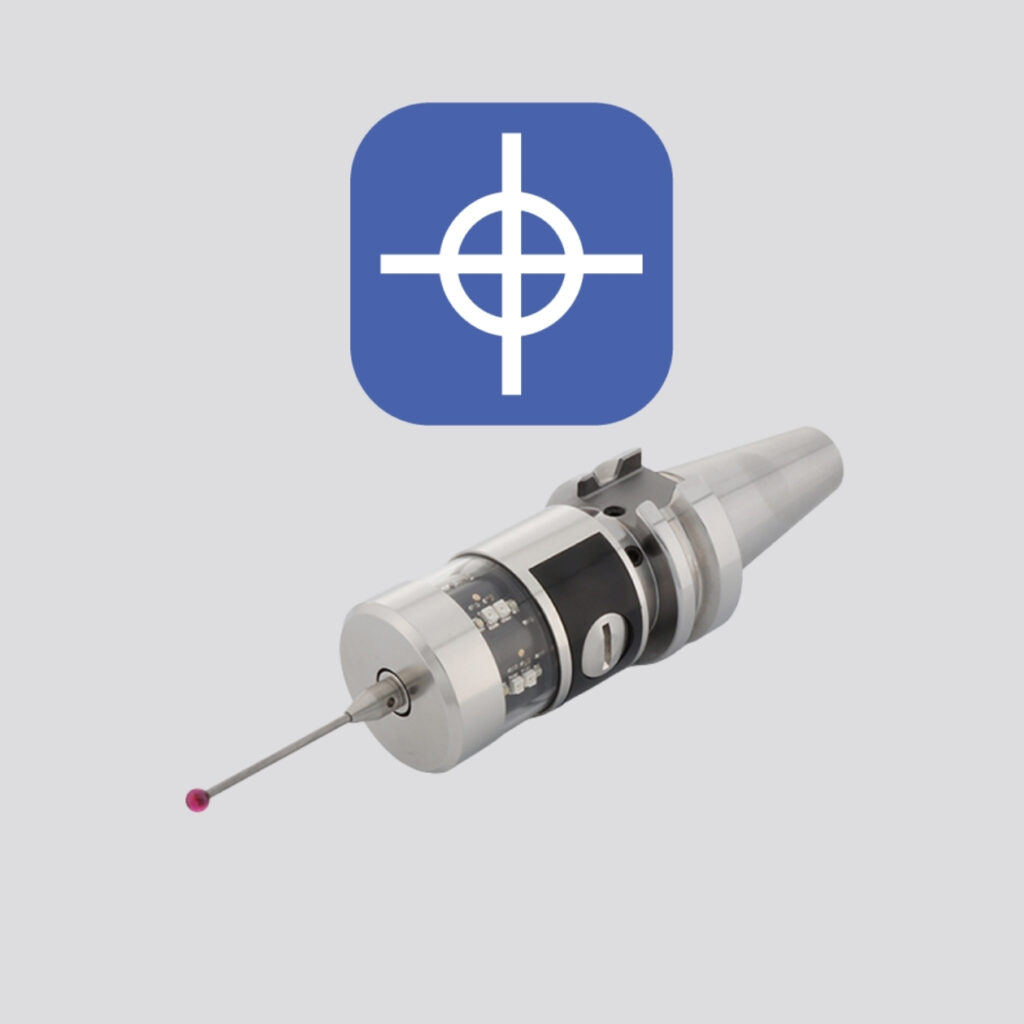
Three-axis kinematic probes use precision balls and a mechanical triggering mechanism to detect contact from any direction. They offer far higher precision than simple mechanical sensors.
These probes provide sub-micron repeatability and are widely used in mold making, precision machining, and geometric inspection.
Typical uses:
- Multi-axis measurement in X, Y, Z
- Locating complex features such as pockets, chamfers, and angled surfaces
- In-machine inspection and tool calibration
- High-accuracy probing cycles
Optical (Laser-Triggered) Touch Probes
Although still contact-based, these sensors replace internal switches with a broken-beam optical trigger.
They are extremely fast, responsive, and free of internal wear.
However, they require clean operating environments and can be affected by oil or coolant mist.
Typical uses:
- High-speed edge detection
- Z-height probing for small delicate parts
- Modern CNC machines requiring rapid sensing
Wireless Touch Probes
Wireless probes work exactly like advanced 3D or optical probes but communicate with the controller via radio signals. They eliminate cable routing challenges, especially in 5-axis machining.
They are ideal for large work envelopes and uninterrupted rotary motion.
Typical uses:
- Zero-setting on large industrial molds and aerospace parts
- Fixture-mounted inspection
- Probing on multi-axis rotary tables
Z-Axis Contact Plates (Tool Setter / Touch Plate)
Touch plates are simple conductive pads used primarily for measuring tool length. When the tool tip touches the plate, the control receives a signal and calculates the exact Z-height.
They are inexpensive, reliable, and widely used in woodworking, light milling, and desktop CNCs.
Typical uses:
- Setting tool length
- Preventing tool breakage during Z-calibration
- CNC stone, wood, aluminum applications
Automatic Tool Setters
These fixed tool-measurement sensors determine tool length and detect tool breakage automatically. They are essential for multi-tool machining and industrial-grade CNC workflows.
Tool setters must be kept clean and periodically recalibrated to maintain reliability.
Typical uses:
- Automatic tool length offset measurement
- Break detection during repetitive cycles
- Consistent dimensional accuracy across tool changes
Inductive Touch Sensors
Inductive probes detect contact through magnetic field disturbance rather than mechanical deflection. Although less precise than 3D probes, they perform well in harsh industrial environments.
Typical uses:
- Probing steel parts in dirty conditions
- Detecting contact where coolant contamination is unavoidable
- Industrial line-based CNC applications
Key Applications of Touch Probes in CNC Workflows
Touch probes serve as the “tactile sense” of CNC machines, enabling the control system to understand the true position and orientation of the workpiece and tools.
Main applications:
- Determining the workpiece zero point (WCS)
- Measuring geometry: hole centers, edges, slots, angles, and surface flatness
- Tool length calibration and prevention of tool crashes
- In-process inspection for quality assurance
- Detecting tool breakage or abnormal tool wear
- Scanning uneven surfaces to compensate for mounting errors
With accurate probing, the CNC machine adjusts its coordinate system dynamically, ensuring consistent machining outcomes even when fixtures or stock vary slightly.
Installation Principles for CNC Touch Probes
Correct installation is essential for accuracy. Even a small misalignment or loose cable can produce significant measurement errors.
Installing Mechanical and 3D Probes
These probes typically mount inside the spindle or a tool holder.
Critical guidelines:
- Ensure full alignment with the spindle axis
- Keep collets clean and free of chips
- Perform X/Y deviation tests after installation
- Route signal cables away from VFD power lines to reduce noise
Installing Z-Touch Plates
Z-plates are placed on the machine table.
Important points:
- The plate surface must be clean and flush
- The ground cable must be firmly connected
- Avoid scratched or oxidized plates
- Use consistent placement for repeatability
Installing Automatic Tool Setters
Mounted on a fixed base inside the machine.
Ensure:
- The stand is rigid and vibration-free
- The CAM workspace includes safe approach paths
- Surfaces remain clean and protected from coolant spray
- Weekly calibration checks
Installing Optical or Wireless Probes
These probes are more sensitive and require controlled positioning.
Installation notes:
- Maintain precise emitter/receiver spacing
- Use fresh batteries in wireless probes
- Keep receivers away from power cables and inverters
- Use protective covers in humid environments
Maintenance Guidelines for Long-Term Precision
Probes maintain accuracy only with proper, regular maintenance.
Mechanical & 3D Probe Maintenance
- Clean stylus tips with microfiber cloths
- Avoid lubricants that attract chips
- Perform monthly 5-point deviation tests
- Recalibrate after any impact or collision
- Keep all internal components dry and dust-free
Touch Plate Maintenance
- Ensure surface cleanliness
- Inspect the grounding cable regularly
- Replace plates with deep scratches
- Test electrical continuity periodically
Tool Setter Maintenance
- Clean active surfaces weekly with isopropyl alcohol
- Test internal switches through the CNC’s diagnostic menu
- Prevent oil buildup on sensing elements
- Recalibrate after any tool strike
Optical & Wireless Sensor Maintenance
- Clean lenses with alcohol wipes
- Maintain proper spacing as per manufacturer specs
- Protect from coolant and mist
- Check signal stability regularly
Practical Tips to Reduce Errors and Extend Probe Life
- Never use high feed rates during probing cycles
- Clean the workpiece before every zero-setting routine
- Store probes in protective cases
- Use anti-vibration mounts on machines with heavy resonance
- Log probe deviation monthly to identify sudden drift
Touch probes offer exceptional precision only when installed carefully, kept clean, and recalibrated at regular intervals. When maintained correctly, they significantly enhance machining accuracy, prevent tool crashes, reduce scrap rates, and support high-quality, repeatable production.
Conclusion
CNC touch probes serve as the tactile sensing system of the machine—measuring, verifying, aligning, and protecting the machining process. When installed, calibrated, and maintained correctly, they dramatically improve precision, reduce errors, extend tool life, and elevate overall machining quality.
Contact Radonix or use the chatbot in the bottom right corner to learn how linear encoders integrate with Radonix control systems.