
Easy Servo Systems in CNC: A Complete, High-Precision Motion Solution
Written by: Radonix R&D Team.
Easy Servo systems bridge the gap between traditional stepper motors and full industrial servo motors, delivering higher accuracy, closed-loop reliability, and smooth motion—at a significantly lower cost than servo platforms.
For CNC builders seeking stability and precision without complex commissioning, Easy Servo technology has become a preferred midpoint solution.
What Makes Easy Servo Different?
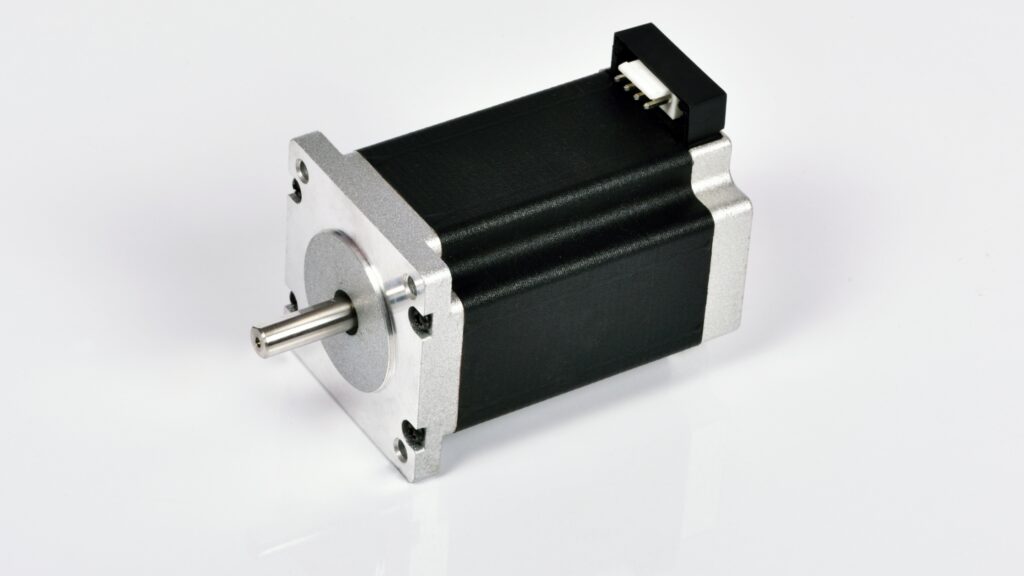
Easy Servo combines a stepper motor, a feedback encoder, and a closed-loop drive to create a motion system that prevents lost steps and dynamically corrects position during cutting, engraving, routing, or rapid axis movements.
This hybrid architecture provides servo‑like behavior—smoother motion, better torque response, and real‑time error correction—while keeping wiring, setup, and total cost closer to stepper‑based systems.
Core Components of an Easy Servo System
Before exploring performance advantages, it helps to understand each component and the role it plays in closed‑loop motion.
Stepper Motor
A hybrid two‑phase or three‑phase stepper (typically 1.8° or 0.9° per step) acts as the main actuator. It delivers strong low‑speed torque and fine‑resolution motion, making it ideal for CNC positioning.
Encoder
Mounted on the rear shaft, the encoder continuously measures actual rotor position. With common resolutions between 1,000 and 5,000 pulses per revolution, it feeds real‑time position data back to the drive.
Easy Servo Drive (Closed‑Loop)
The drive compares commanded pulses with true motor position using PID‑driven closed‑loop control. If an error is detected—such as from cutting load, vibration, or acceleration—the drive increases torque to correct it instantly.
Supported commands typically include Pulse/Dir and RS‑485/Modbus, making integration with CNC controllers straightforward.
How Easy Servo Motion Works
When the CNC controller sends movement pulses, the drive energizes the motor while continuously receiving position feedback from the encoder.
If the motor begins to lag—for example, due to sudden load changes or rapid acceleration—the drive automatically boosts current and torque. This prevents lost steps, stabilizes motion, and ensures accurate path following.
The result is a system that maintains the simplicity of steppers but performs with servo‑like precision.
Advantages of Easy Servo in CNC Applications
Before listing each advantage, it’s important to understand why closed‑loop control matters in CNC: position accuracy, motion smoothness, and continuous torque availability directly influence cut quality and machine reliability.
High Position Accuracy
Closed‑loop correction enables positioning errors below 0.01 mm, making it suitable for routers, engravers, and precision cutting machines.
Zero Lost Steps
Unlike open‑loop steppers, Easy Servo systems automatically recover from load disturbances, ensuring that programmed toolpaths match real‑world motion.
Fast Response and Stable Torque
Real‑time current control keeps torque output steady, improving chip load consistency and reducing vibration during fast axis changes.
Smooth, Vibration‑Free Motion
Encoder feedback eliminates mid‑band resonance and produces noticeably smoother, quieter motion.
Lower Heat and Energy Consumption
Current automatically reduces at standstill or during light motion, improving both motor lifespan and efficiency.
Easy Installation
Most Easy Servo drives are plug‑and‑play with minimal tuning—vastly simpler than traditional servo systems.
Cost‑Effective
Positioned between steppers and servo motors, Easy Servo offers strong performance without the high cost of industrial servos.
Limitations and Important Considerations
Each motion technology has trade‑offs. Understanding Easy Servo limitations helps ensure correct system selection.
Higher Cost Than Standard Steppers
The integrated encoder and closed‑loop electronics make Easy Servo more expensive than basic stepper systems.
Lower Maximum Speed Than True Servo Motors
Although faster than open‑loop steppers, Easy Servo systems cannot match the top speeds or dynamic range of AC servos.
Torque Reduction at High RPM
Torque output falls as speed increases, limiting suitability for high‑speed, high‑load industrial processes.
More Complex Than Standard Steppers
Feedback wiring and more advanced drivers require more attention during installation and troubleshooting.
Less Efficient Under Heavy Continuous Loads
Servos remain the better choice for high‑duty, high‑power, long‑cycle industrial operations.
Where Easy Servo Is Used in CNC Machines
Easy Servo is now a standard choice across many CNC platforms because it balances speed, precision, and cost.
It is widely used in:
- CNC routers
- Laser and plasma cutters
- 3‑axis and 4‑axis milling machines
- Woodworking and engraving systems
- High‑acceleration motion axes with frequent direction changes
The improved stability directly enhances cut surface quality, toolpath accuracy, and mechanical lifespan.
Easy Servo vs. Servo Motors: What’s the Difference?
Before comparing, it’s helpful to remember that both systems use feedback—but their purpose and performance differ.
Structural Design Differences
- Servo motors use separate motors, drives, and often high‑resolution encoders.
- Easy Servo motors integrate the motor and encoder into a single, compact package.
Installation and Setup
- Servos require detailed tuning and complex wiring.
- Easy Servo is faster to install, often with minimal adjustments.
Application Differences
- Servos excel in high‑speed, high‑power, or heavy industrial operations.
- Easy Servo suits medium‑precision CNC machines, tight spaces, and budget‑sensitive builds.
Cost and Maintenance
- Servos cost more and may require maintenance across separate components.
- Easy Servo offers lower maintenance due to its integrated design.
Comparison With Other Motor Technologies
Easy Servo also sits between classic stepper and AC/DC motors.
Versus Stepper Motors
Steppers lack true feedback and can lose position under load. Easy Servo resolves this with encoder feedback and closed‑loop correction.
Versus AC/DC Motors
AC/DC motors provide simple motion but lack precision, making them unsuitable for high‑accuracy CNC demands.
Summary
Easy Servo technology provides a balanced, intelligent solution for CNC motion systems. By combining stepper simplicity with encoder feedback and real‑time position correction, it delivers stable, accurate motion without the high cost of full servo platforms.
For CNC builders seeking better cut quality, improved reliability, and smoother motion, Easy Servo stands out as a practical and powerful upgrade.
Contact Radonix or use the chatbot in the bottom right corner to learn how linear encoders integrate with Radonix control systems.