

Introduction
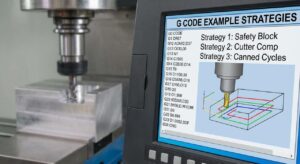
The spindle is one of the most critical mechanical components of any CNC machine. CNC Machine Spindle rotates the cutting tool at controlled speeds and transmits the power needed for machining operations. Whether producing furniture, machining metal, engraving stone, or cutting composite materials, spindle performance directly affects machining quality, productivity, and tool life.
Selecting the appropriate spindle requires understanding several factors, including spindle type, power, speed, torque, cooling method, and tool interface. While the spindle provides the mechanical motion, the CNC controller is responsible for controlling spindle speed, direction, and synchronization with machine movement. Industrial CNC controllers such as Radonix ensure reliable spindle control and seamless integration with modern machining systems.
What Is a CNC Machine Spindle?
A CNC spindle is the rotating assembly that holds and drives the cutting tool during machining.
Its primary functions include:
- Rotating the cutting tool
- Delivering cutting torque
- Maintaining machining accuracy
- Supporting high-speed operation
- Providing stable performance under load
Because the spindle directly contacts the cutting tool, its quality has a significant influence on machining precision and surface finish.
Main Components of a CNC Spindle
Spindle Shaft
The spindle shaft transfers rotational motion from the motor to the cutting tool.
A well-designed shaft provides:
- High rigidity
- Low vibration
- Accurate rotation
- Long service life
Bearings
Bearings support the spindle shaft while allowing smooth rotation at high speeds.
Common bearing types include:
- Angular contact ball bearings
- Hybrid ceramic bearings
- Precision steel bearings
Bearing quality directly influences:
- Maximum spindle speed
- Position accuracy
- Thermal stability
- Service life
Tool Holder Interface
The spindle connects to cutting tools through standardized interfaces.
Common systems include:
- ER11 / ER16 / ER20 / ER32 Collets
- ISO20
- ISO30
- BT30
- BT40
- HSK
The appropriate interface depends on machining accuracy, spindle power, and whether the machine uses an Automatic Tool Changer (ATC).
Cooling System
Continuous machining generates heat that must be controlled to maintain spindle accuracy.
Air-Cooled Spindles
Advantages:
- Simple installation
- Lower maintenance
- Cost-effective
Applications:
- Hobby routers
- Light woodworking
- Educational machines
Water-Cooled Spindles
Advantages:
- Better thermal stability
- Lower operating temperature
- Reduced noise
- Suitable for continuous industrial operation
Applications:
- Industrial routers
- Metal machining
- Stone processing
- High-duty production machines
Types of CNC Spindles
Manual Tool Change (MTC) Spindles
The cutting tool is changed manually by the operator.
Advantages:
- Lower cost
- Simple construction
- Easy maintenance
Suitable for:
- Small workshops
- Prototype production
- Entry-level CNC machines
Automatic Tool Change (ATC) Spindles
ATC spindles automatically change tools during machining.
Advantages:
- Reduced setup time
- Improved productivity
- Higher automation
- Better process efficiency
Industrial CNC controllers such as Radonix can integrate with automatic tool-changing systems, enabling fully automated machining cycles.
Spindle Power
Spindle power determines how much material can be removed efficiently.
Typical ranges include:
| Application | Typical Power |
| Hobby CNC | 0.8–2.2 kW |
| Woodworking | 3–9 kW |
| Aluminum Machining | 5–12 kW |
| Steel Machining | 7.5–30 kW |
| Heavy Industrial Milling | 20–60+ kW |
Higher power allows the spindle to maintain cutting performance under increased loads.
Spindle Speed
Spindle speed is measured in revolutions per minute (RPM).
Different materials require different spindle speeds.
| Material | Typical RPM |
| Wood | High |
| Plastics | Medium to High |
| Aluminum | Medium to High |
| Steel | Lower |
| Stone | Medium |
Operating at the correct spindle speed improves:
- Surface finish
- Tool life
- Cutting efficiency
- Chip evacuation
Radonix controllers support precise spindle speed control, allowing operators to match machining parameters to the material and tooling requirements.
Spindle Torque
While spindle speed determines rotational velocity, torque determines the spindle’s ability to maintain cutting force.
High torque is particularly important for:
- Steel machining
- Large diameter tools
- Heavy roughing operations
High-speed finishing applications generally require less torque but higher spindle speeds.
The correct balance between speed and torque depends on the machining process.
Spindle Runout
Runout refers to the deviation between the spindle’s rotational centerline and the actual rotation of the cutting tool.
Excessive runout can cause:
- Poor dimensional accuracy
- Rough surface finish
- Increased vibration
- Premature tool wear
Maintaining low runout is essential for precision machining.
Factors That Affect Spindle Performance
Several factors influence spindle performance:
- Bearing quality
- Tool holder condition
- Dynamic balancing
- Cooling efficiency
- Proper lubrication
- Machine rigidity
- Tool length
- Cutting parameters
Optimizing these factors helps maximize spindle life and machining quality.
The Relationship Between the CNC Controller and the Spindle
Although the spindle is a mechanical component, its performance depends on accurate control.
The CNC controller manages functions such as:
- Spindle start and stop
- Clockwise and counterclockwise rotation
- Variable spindle speed control
- Synchronization with machine motion
- Automatic tool change commands
- Safety monitoring
Reliable spindle control improves machining consistency and overall production efficiency.
Industrial controllers such as Radonix provide stable spindle control and integrate with a wide range of spindle systems used in woodworking, metalworking, stone processing, and other CNC applications.
Choosing the Right Spindle
When selecting a spindle, manufacturers should consider:
- Material to be machined
- Required spindle speed
- Required torque
- Duty cycle
- Cooling method
- Tool holder type
- Machine rigidity
- Automatic tool changing requirements
Choosing a spindle that matches the application improves machining performance while extending both tool and spindle life.
Conclusion
The spindle is one of the most important components of a CNC machine, directly influencing machining accuracy, productivity, and surface quality. Understanding spindle types, power ratings, cooling methods, and tooling interfaces helps manufacturers select the most suitable solution for their applications.
When combined with a high-performance CNC controller such as Radonix, a properly selected spindle can deliver accurate speed control, reliable operation, and consistent machining performance across a wide range of industrial CNC systems.