
How Radonix Ensures Every New Feature Is Production-Ready
Written by: Radonix R & D Team.
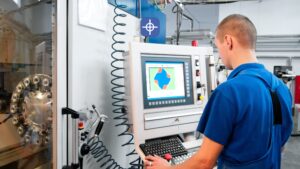
CNC controller validation is a critical step in ensuring that new features perform reliably in real production environments. At Radonix, every update undergoes strict testing before it ever reaches a customer’s machine.
At Radonix, innovation is never released for the sake of novelty. In industrial CNC environments, every new feature must operate safely, predictably, and continuously under real production pressure. Whether it is a motion-control enhancement, a safety-layer improvement, or a software workflow update, each feature must prove it can perform reliably before reaching customer machines.
This is why Radonix follows a disciplined, multi-stage validation process designed specifically for industrial CNC controller technology. The goal is simple: ensure every new capability is genuinely production-ready from day one.
1. In-House Engineering Validation
Every feature begins its life inside Radonix’s engineering environment, where firmware, software, and hardware are tested together as a complete system.
At this stage, engineers validate:
- Firmware behavior under normal and edge-case conditions
- Software logic, user-interface response, and error handling
- Hardware compatibility across supported controller platforms
Stress testing plays a critical role here. Features are pushed beyond typical operating limits to identify unexpected behavior, timing conflicts, or performance degradation. Simulated fault conditions are also introduced to confirm that safety logic and fallback mechanisms respond correctly. Only features that demonstrate stable and repeatable behavior move forward.
2. Integration Testing on Real CNC Machines
Laboratory validation alone is not sufficient for industrial automation. CNC controllers interact with motors, drives, spindles, sensors, and safety circuits that behave differently under mechanical load.
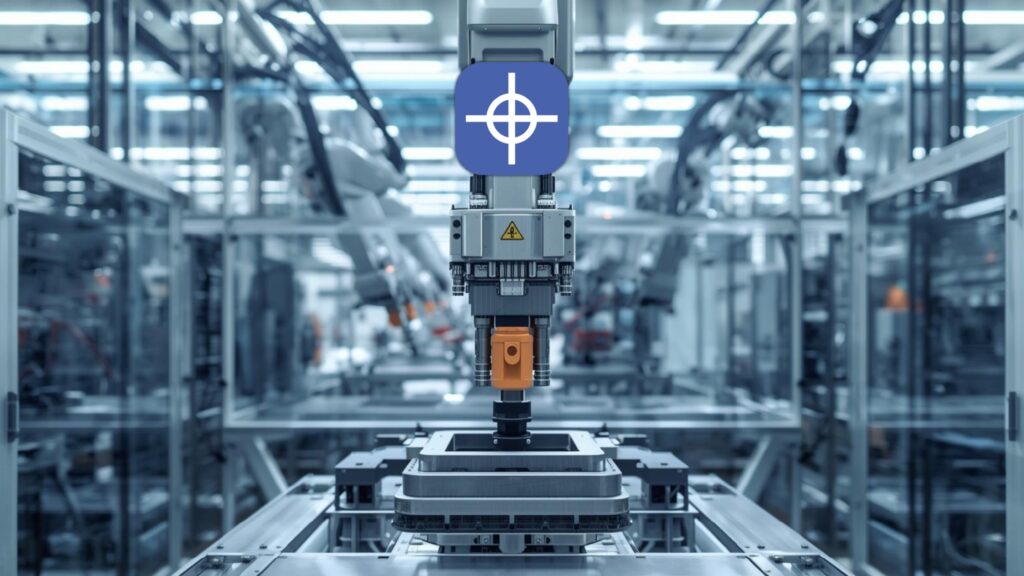
Radonix therefore tests new features on real CNC machines, including mills, routers, plasma systems, and application-specific platforms depending on the feature scope. This phase focuses on:
- Motion accuracy and trajectory consistency
- Machine-specific interoperability
- Real-time responsiveness during cutting operations
Testing under load allows engineers to observe effects that cannot be reproduced in simulation, such as vibration influence, thermal behavior, and timing interactions between motion and I/O signals.
3. Beta Testing with Trusted Industry Partners
Before a feature is publicly released, Radonix deploys it to a limited group of trusted industrial partners. These partners operate real production environments where uptime, repeatability, and operator efficiency are critical.
Feedback collected during this phase includes:
- Usability and operator workflow impact
- Stability during extended production runs
- Performance under high-demand scenarios
- Integration behavior within existing production processes
This stage often leads to refinements that improve usability or robustness without altering the core function. Partner feedback ensures the feature performs not only technically, but practically, in daily production use.
4. Reliability and Long-Term Stability Testing
Industrial CNC controllers are expected to run continuously, sometimes around the clock. To meet this expectation, Radonix subjects every validated feature to extended reliability testing.
This phase verifies that:
- Existing controller functions remain unaffected
- No new instability or regressions are introduced
- Long-duration operation remains consistent and predictable
Controllers are operated continuously under simulated production workloads to observe thermal behavior, memory usage, and long-term performance consistency. Any anomaly results in revision or rollback until stability is fully confirmed.
5. Documentation and Training Preparation
A feature is not considered complete until it can be safely and confidently used by operators, integrators, and maintenance teams.
Before release, Radonix prepares and reviews:
- Updated user manuals and interface explanations
- Technical documentation for system integrators
- Integration notes for machine builders
- Training materials for partners and end users
Clear documentation reduces operational risk, shortens onboarding time, and ensures features are applied correctly in production environments.
A Process Built for Industrial Reality
This structured validation process allows Radonix to deliver CNC controller features that are not only innovative, but dependable. Each stage builds confidence that new capabilities will function correctly under real manufacturing conditions, not just in controlled test environments.
For Radonix customers, this means updates that enhance performance without introducing uncertainty. Controllers are trusted to run critical operations, and every feature released reflects that responsibility. By prioritizing validation, testing, and long-term stability, Radonix ensures innovation never compromises reliability.
6. Cross-Version & Backward Compatibility Validation
Introducing new features should never disrupt existing production environments. Before any release, Radonix engineers validate every feature against previous firmware and software versions to ensure backward compatibility. This process verifies that legacy machines, older controller generations, and long-running production setups continue to operate without regression. Compatibility matrices, controlled downgrade tests, and mixed-version simulations are used to confirm seamless coexistence across deployments.
7. Release Readiness & Controlled Rollout
Once technical validation is complete, features enter a controlled release phase. Rollouts are staged, monitored, and closely tracked for anomalies in real production conditions. Telemetry, log analysis, and customer feedback channels are actively reviewed during this phase. Only after stable performance is confirmed does the feature become fully available across the Radonix ecosystem.
This final safeguard ensures that innovation reaches customers in a stable, predictable, and production-ready form—without surprises.
Contact Radonix or use the chatbot in the bottom right corner to learn how linear encoders integrate with Radonix control systems.