
Author: Radonix R&D Team – CNC Control Systems & Industrial Automation
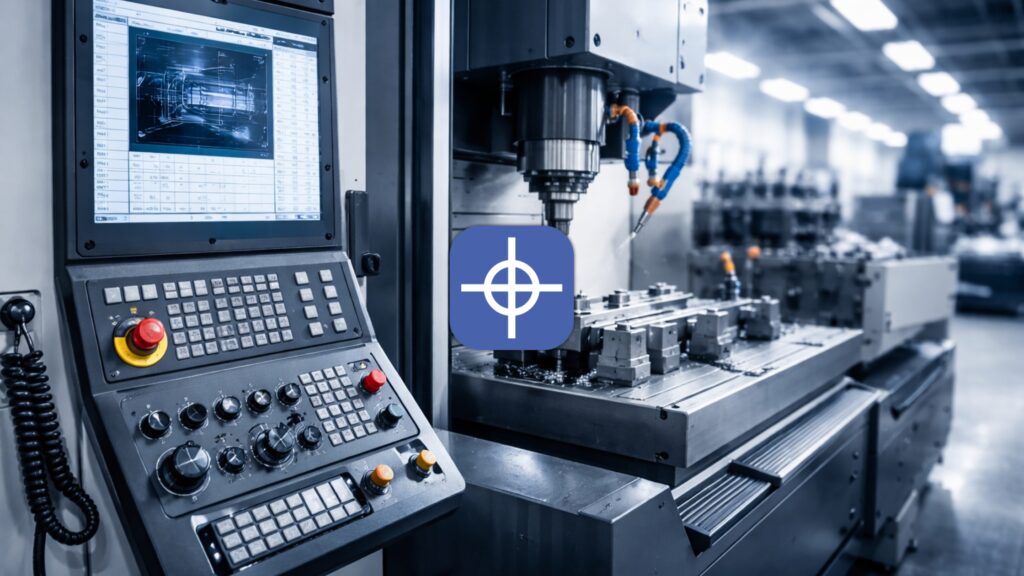
CNC controllers are the core of any CNC system, responsible for executing motion commands, coordinating machine components, and ensuring precise operation. When controller-related failures occur, they can lead to unexpected downtime, reduced machining accuracy, and production losses.
Many of these issues are not random—they are often the result of limitations in controller design, communication architecture, or system integration. Industrial solutions like Radonix controllers are engineered to reduce such risks through robust hardware and real-time control systems.
1. Communication Failures
Problem:
Unstable or lost communication between the CNC controller and drives, I/O modules, or operator interface.
Causes:
- Poor cable quality or shielding
- Electrical noise (EMI)
- Use of non-industrial communication protocols
- Improper network configuration
Solution:
- Use industrial communication protocols such as EtherCAT
- Implement proper grounding and shielding
- Use high-quality industrial cables
- Ensure stable network topology
Radonix controllers are designed with a reliable communication architecture, ensuring stable data exchange even in electrically noisy environments.
2. Motion Instability (Jitter and Vibration)
Problem:
Irregular or jerky motion affecting machining accuracy and surface finish.
Causes:
- Non-deterministic control systems
- Weak processing performance
- Poor motion algorithms
- Incorrect motor tuning
Solution:
- Use real-time capable controllers
- Optimize motion profiles
- Perform proper servo tuning
- Ensure deterministic communication
Radonix controllers utilize real-time motion control strategies to ensure smooth, stable operation and improved machining quality.
3. Position Loss and Accuracy Issues
Problem:
The machine fails to reach or maintain the correct position.
Causes:
- Open-loop systems without feedback
- Encoder signal issues
- Mechanical backlash
- Electrical interference
Solution:
- Use closed-loop systems (servo motors)
- Perform regular calibration
- Verify encoder signal integrity
- Reduce mechanical play
Radonix supports advanced feedback integration to maintain consistent positioning accuracy.
4. Controller Freezing or System Crashes
Problem:
The controller becomes unresponsive during operation.
Causes:
- Insufficient processing power
- Unstable PC-based systems
- Software or firmware issues
- Overheating
Solution:
- Use dedicated industrial CNC controllers
- Ensure proper cooling
- Keep firmware updated
- Avoid unnecessary system load
Radonix controllers are purpose-built industrial systems, ensuring stability under continuous workloads.
5. Electrical Noise and Interference (EMI)
Problem:
False signals, unexpected stops, or communication errors.
Causes:
- Poor grounding
- Improper cable routing
- Nearby high-power equipment
Solution:
- Proper grounding and shielding
- Separation of signal and power lines
- Use industrial-grade components
Radonix hardware is designed with EMI resistance for reliable performance in harsh environments.
6. I/O Signal Failures
Problem:
Sensors, switches, or input/output signals fail to operate correctly.
Causes:
- Wiring faults
- Faulty components
- Voltage mismatches
- Noise interference
Solution:
- Verify wiring and signal levels
- Replace defective components
- Use opto-isolated inputs
- Perform regular system testing
Radonix systems support robust I/O integration, allowing stable interaction between sensors, actuators, and control logic.
7. Overheating of Controller Components
Problem:
Performance degradation or shutdown due to excessive heat.
Causes:
- Poor enclosure design
- Lack of ventilation
- Continuous heavy operation
Solution:
- Implement proper cooling systems
- Monitor temperature
- Use industrial-grade hardware
Industrial-grade design in Radonix controllers ensures reliable performance even during continuous operation in demanding conditions.
8. Software Configuration Errors
Problem:
Incorrect system behavior due to misconfiguration.
Causes:
- Incorrect motion parameters
- Misconfigured I/O mapping
- Incompatible G-code
Solution:
- Validate configurations
- Use tested parameter sets
- Train operators
- Maintain documentation
With structured system design and clear configuration workflows, Radonix controllers help reduce setup errors and simplify system integration.
Why These Failures Matter
Controller-related issues directly impact:
- Machining precision
- Surface quality
- Production efficiency
- Maintenance costs
Selecting a well-designed controller is essential to avoid these problems and ensure long-term system stability.
Preventive Best Practices
To minimize failures:
- Use industrial-grade CNC controllers
- Ensure correct installation and wiring
- Perform regular maintenance
- Monitor system performance
- Train technical personnel
Many of these preventive measures are inherently addressed in the design philosophy of Radonix, where reliability and real-world performance are prioritized.
Conclusion
CNC controller failures are often preventable when the system is designed, installed, and configured correctly. By addressing common failure points and choosing reliable control solutions, manufacturers can significantly improve operational efficiency and reduce downtime.
About Radonix
Radonix develops industrial CNC controllers focused on precision, reliability, and seamless integration. With real-time control capabilities and robust system design, Radonix solutions are built to meet the demands of modern manufacturing environments.