
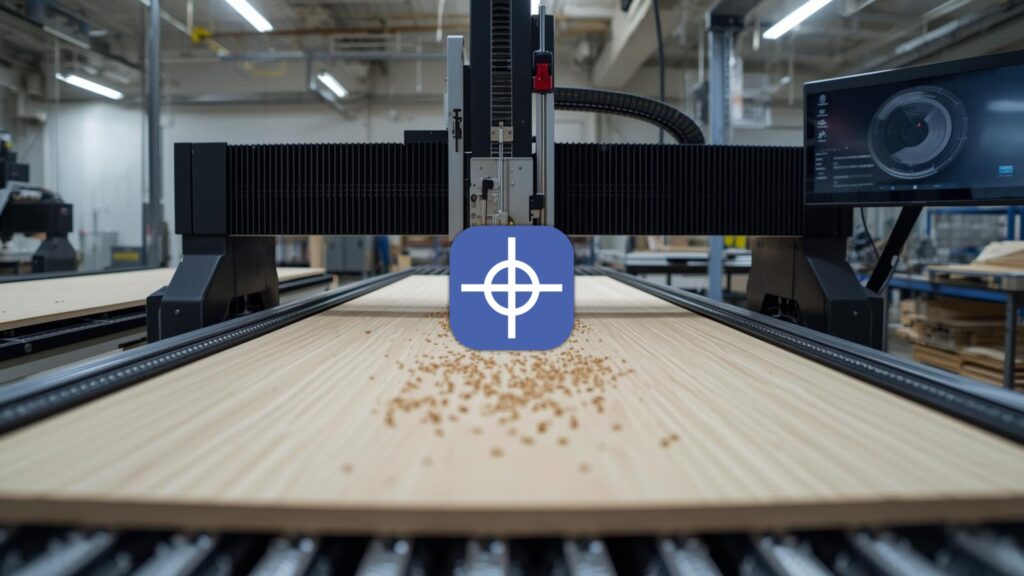
Woodworking is one of the most widespread CNC applications, ranging from furniture production and cabinetry to decorative panels and nesting operations. While wood is relatively easy to cut compared to metal or stone, CNC control in woodworking presents its own unique challenges. High speeds, long toolpaths, and production-focused workflows place very specific demands on the CNC controller.
At Radonix, CNC controllers for woodworking are designed to prioritize motion smoothness, speed stability, and operator simplicity, ensuring that machines remain productive without sacrificing quality.
Why Woodworking CNC Is Different
Unlike metal machining, woodworking often involves:
- Very high feed rates
- Long, continuous cutting paths
- Frequent job changes
- Large sheet materials (MDF, plywood, particle board)
In these conditions, the CNC controller must maintain smooth motion over extended periods. Any vibration, hesitation, or timing irregularity can leave visible tool marks on the surface—even if the machine structure itself is rigid.
That is why, in woodworking, motion quality and timing consistency often matter more than raw cutting force.
Motion Smoothness and Surface Finish
In woodworking, surface finish is immediately visible. Small inconsistencies in motion can result in:
- Burn marks
- Chatter lines
- Uneven edges
- Poor fit during assembly
A CNC controller must generate continuous, smooth trajectories—especially during curves and corners. Deterministic motion control ensures that axis updates occur at fixed intervals, preventing micro-pauses that would otherwise affect surface quality.
Radonix CNC controllers are engineered to deliver consistent motion behavior at high speed, which is essential for clean woodworking results.
High-Speed Interpolation
Wood CNC routers often operate at feed rates far higher than those used in metal machining. At these speeds, the controller must interpolate toolpaths accurately while managing acceleration and deceleration smoothly.
Poor interpolation can lead to:
- Rounded corners where sharp edges are expected
- Sudden speed changes that stress the tool
- Reduced dimensional accuracy
A well-designed CNC controller balances speed and precision, ensuring that fast motion does not compromise the final product.
Operator Workflow Matters
Woodworking shops are often production-oriented environments. Operators may run multiple jobs per shift, frequently switching programs and materials. For this reason, the interface and workflow design of the CNC controller is especially important.
Effective woodworking CNC control focuses on:
- Fast job loading
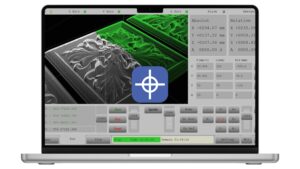
- Clear program visualization
- Simple feed and spindle overrides
- Minimal unnecessary parameters on screen
Radonix woodworking interfaces are designed to reduce cognitive load, allowing operators to focus on production rather than navigating complex menus.
Tool Changes and Repetitive Jobs
Many woodworking machines use automatic tool changers and run repetitive cutting patterns. The CNC controller must handle tool management reliably and predictably to avoid downtime or mistakes.
Consistent control behavior ensures that the same job produces the same result—whether it is the first panel of the day or the hundredth.
Safety in Woodworking CNC
Although woodworking CNC machines are generally less force-intensive than metal machines, safety remains critical. High-speed spindles, sharp tools, and large moving gantries require reliable control.
The CNC controller enforces:
- Axis travel limits
- Emergency stop behavior
- Safe startup and recovery after interruptions
By separating safety logic from the operator interface, industrial CNC controllers ensure protection even during heavy interaction or unexpected events.
Why Industrial CNC Controllers Matter in Woodworking
It is tempting to assume that woodworking CNC machines can rely on simpler control systems. In reality, the combination of high speed and visible surface quality makes stable, deterministic control essential.
Industrial CNC controllers provide:
- Predictable motion timing
- Reliable long-cycle operation
- Consistent surface quality
- Better scalability for automation
Radonix controllers bring these advantages into woodworking environments without unnecessary complexity.
Radonix Approach to Woodworking CNC Control
Radonix designs CNC controllers that adapt to woodworking workflows while maintaining an industrial-grade control core. This approach allows:
- High-speed motion with stable timing
- Clean, task-oriented interfaces for wood operators
- Long-term reliability in production settings
By focusing on control quality rather than generic features, Radonix ensures that woodworking machines remain fast, consistent, and easy to operate.
Conclusion
CNC control in woodworking is about much more than moving a router along a path. It is about smooth motion, predictable timing, and efficient operator interaction. High speeds amplify even small control imperfections, making controller design a key factor in final product quality.
With deterministic motion control, industry-focused interfaces, and reliable safety handling, Radonix CNC controllers provide a strong foundation for modern woodworking machines—supporting productivity today while remaining adaptable for future needs.