
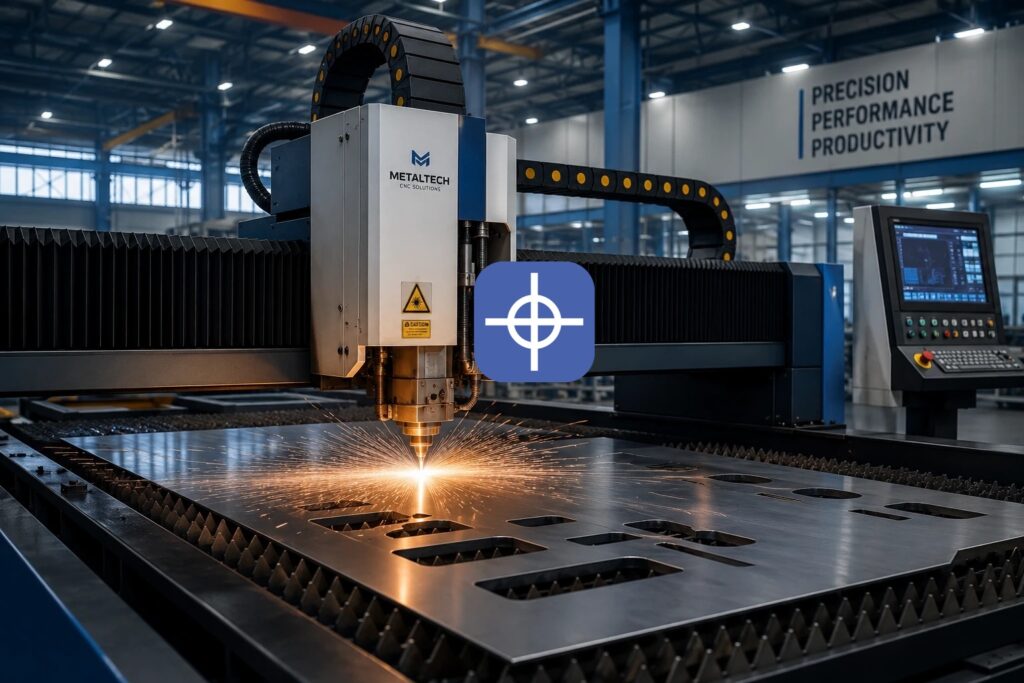
The laser engraving and cutting sector is experiencing explosive growth in 2026. Driven by surging demand for product personalization, custom signage, promotional merchandise, architectural detailing, jewelry, and industrial part marking, global laser system sales continue to accelerate. Market analysts project the broader laser cutting and engraving equipment market to expand at a compound annual growth rate exceeding 9% through 2030, fuelled by e-commerce customization platforms, sustainable material processing, and Industry 4.0 automation.
For OEMs and machine builders, this boom presents both opportunity and challenge. End-users expect machines that deliver flawless results across diverse materials — from CO2 lasers processing wood, acrylic, leather, and textiles to high-power fiber lasers cutting and marking metals with micron-level precision. Yet the success of any laser system ultimately depends on the human-machine interface (HMI). Generic or poorly adapted control software forces operators to navigate cluttered screens, manually enter complex parameter sets, and manage safety protocols outside the main workflow.
This is precisely why forward-thinking OEMs are turning to Radonix tailored CNC interfaces for laser. Radonix, the UK-accessible leader in PC-based CNC control, has developed a comprehensive range of purpose-built laser engraving and cutting interfaces that run natively inside its powerful CAM-Pro software.
These solutions go far beyond basic motion control. Each Radonix tailored CNC interface for laser is a complete, machine-specific environment featuring dedicated screens, material libraries, real-time monitoring, and advanced safety interlocks engineered around the exact requirements of CO2, fiber, and hybrid laser systems.
Whether you are designing compact desktop engravers for the signage market or high-throughput industrial fiber cutters for metal fabrication, Radonix laser engraving interfaces Radonix and laser cutting HMI 2026 options deliver the customization, reliability, and branding flexibility that OEMs need to differentiate their machines in a crowded marketplace.
With full white-label capabilities, pre-configured material presets, and seamless integration with popular laser sources (including Ruida-compatible, Trocen, and direct analogue/power modulation), Radonix helps OEMs reduce time-to-market, minimise support calls, and deliver superior end-user experiences.
This 2026 guide explores the challenges of generic laser interfaces, the standout features of Radonix solutions, the tangible benefits for machine builders, a step-by-step implementation process, real-world success stories, and answers to the most frequent questions from OEM partners.
Challenges OEMs Face with Generic Laser CNC Interfaces
Parameter Management and Material-Specific Settings
Generic interfaces force operators to remember or look up dozens of parameters: laser power, speed, frequency or PWM duty cycle, focus depth, passes, air assist pressure, and kerf compensation. For CO2 systems this might involve managing RF or DC excitation levels; for fiber lasers it includes Q-switch frequency, waveform selection, and pulse energy.
Without a dedicated material library, each new job becomes a trial-and-error process that wastes time and materials.
Radonix tailored CNC interfaces for laser solve this with built-in, expandable material databases containing hundreds of pre-tested recipes for common substrates.
Precision and Safety Requirements in High-Power Laser Systems
High-power laser systems (100 W–6 kW) demand sub-millisecond response times for power modulation, precise Z-axis focus control, and robust safety interlocks. Generic HMIs often lack native support for real-time power ramping, beam-on status visualisation, or automatic shutdown on door-open events.
This leads to inconsistent results, higher scrap rates, and potential safety compliance issues under CE, UKCA, and ISO 13849 standards.
Radonix OEM laser CNC interface solutions incorporate hardware-level safety logic directly into the HMI, ensuring compliance and peace of mind for both builders and end-users.
Key Features of Radonix Tailored Laser Interfaces
Dedicated Screens for Power, Speed, and Focus Control
Every Radonix tailored CNC interface for laser features a clean, glove-friendly main dashboard with large, colour-coded sliders and numeric inputs for:
Instant laser power (0–100%) with real-time wattage display
Cutting/engraving speed overrides (1–1000 mm/s)
Focus position (manual or automatic Z/lens adjustment)
Frequency/PWM settings with waveform preview for fiber systems
Multiple passes with individual parameter sets
Context-sensitive toolbars change automatically between engraving mode (vector + raster) and cutting mode (through or kiss-cut).
Material Library Integration and Job Preview Functions
The integrated material library allows operators to select “Acrylic 3 mm Clear – CO2” or “Stainless 2 mm – Fiber 1000 W” and instantly load optimised settings.
Operators can add custom entries, rate results, and share libraries across machines.
Job preview includes full simulation showing:
Engraving depth estimation
Cut path with kerf visualisation
Estimated processing time
Collision and overheating risk alerts
Safety Interlocks and Real-Time Monitoring
Radonix CO2 laser interface and fiber variants include:
Live beam status (ready / firing / warm-up)
Door and enclosure interlock monitoring with visual map
Emergency stop and pause/resume with power ramp-down
Temperature and chiller status for high-power systems
Automatic fume extraction and air-assist control via M-codes
Power-fail recovery that resumes exactly at the last executed vector or raster line
These features dramatically reduce operator errors and support calls.
Benefits for OEMs and Machine Builders in 2026
Faster Integration and Branding Opportunities
Radonix interfaces load as compact .REG files and integrate with any Radonix PC-Smart or PC-Pro controller in minutes. The OEM programme provides full white-labelling — your company logo, splash screen, colour scheme, and custom startup sequence.
Many European and UK laser machine builders now ship every unit with a pre-installed, fully branded customized laser control panels solution, shortening their development cycle by 4–6 weeks.
Enhanced End-User Experience and Lower Support Calls
Intuitive layouts and visual guidance mean end-users become productive faster. OEMs report 60–75% fewer first-month support tickets after switching to Radonix laser cutting HMI 2026 solutions.
Comparison Table: Radonix vs. Standard Laser Interfaces
| Feature | Radonix Tailored CNC Interfaces for Laser | Standard / Generic Laser Interfaces |
| Material Library & Presets | 200+ pre-tested, user-expandable | Basic or none |
| Real-time Power & Focus Sliders | Large, glove-friendly, live preview | Small numeric entry |
| Safety Interlock Visualisation | Full enclosure map with status | Simple text alarms |
| Job Simulation & Time Estimate | 3D vector/raster with depth preview | Basic 2D path only |
| Branding & White-Label | Full OEM customisation | Limited or none |
| Power-Fail Resume | Exact last-line recovery | Restart from beginning |
| Typical Integration Time | < 15 minutes | 1–3 days |
| End-User Training Time | 2–4 hours | 1–2 days |
Step-by-Step Guide to Requesting and Implementing a Custom Laser Interface
Using CAM-Pro for Interface Loading and Testing
- Request your custom interface via the form on https://www.radonix.co.uk/interfaces/.
- Receive the .REG file and supporting documentation.
- Open Radonix CAM-Pro → File → Load Interface → select file.
- Restart CAM-Pro; the tailored Radonix tailored CNC interface for laser loads instantly.
- Run the built-in laser calibration wizard (power, focus, and interlock test).
- Import DXF/PLT or G-code, simulate, and test on your machine.
Collaboration Process with Radonix Engineers
OEMs provide machine I/O list, laser source model, enclosure details, and desired workflow.
Radonix engineers deliver a first draft within 5–7 working days, incorporate feedback, and supply final version with full testing support and remote commissioning via AnyDesk.
Case Studies and Success Stories
Examples from Signage, Jewelry, and Industrial Marking Manufacturers
A UK signage OEM integrated the Radonix CO2 laser interface across 45 machines. They reduced average job setup time from 12 minutes to 90 seconds and cut support calls by 68% in the first year.
A German jewelry machine builder used a custom fiber laser engraving interfaces Radonix solution with high-resolution raster screens and automatic focus mapping. The branded interface helped them win three major European contracts by demonstrating superior operator experience during showroom demos.
An industrial marking specialist in Turkey deployed hybrid CO2/fiber interfaces for multi-material lines. Real-time monitoring and material library features increased daily throughput by 47% while maintaining 100% traceability for automotive parts.
Conclusion
In 2026, success in the laser engraving and cutting market belongs to OEMs who deliver not only powerful hardware but also intelligent, intuitive control systems.
Radonix tailored CNC interfaces for laser provide exactly that competitive edge — combining machine-specific optimisation, advanced safety, comprehensive material management, and full branding freedom into a single, future-proof solution.
By choosing Radonix, OEMs accelerate product development, reduce after-sales costs, enhance end-user satisfaction, and position their machines as premium, operator-friendly solutions in a personalization-driven market.
Download demo versions and technical specifications. Contact our OEM partnership team directly for a personalised consultation, volume licensing discussion, or live remote demo of your exact machine configuration.
Partner with Radonix and deliver laser machines that operators love to use — and customers love to buy — throughout 2026 and beyond.
FAQ – Radonix Tailored CNC Interfaces for Laser Engraving and Cutting
- Do Radonix tailored CNC interfaces for laser support both CO2 and fiber lasers?
Yes. Dedicated variants handle CO2 (RF and DC) and fiber sources with appropriate power modulation, focus control, and parameter sets. - Can I brand the interface with my company logo and colours?
Absolutely. The OEM programme includes full white-labelling, custom splash screens, and startup sequences. - How long does it take to receive a custom laser interface?
Standard custom requests are delivered within 10–14 working days after receipt of machine specifications. - Are Radonix laser cutting HMI 2026 solutions compatible with Ruida or Trocen controllers?
Radonix interfaces work with Radonix motion controllers. Direct integration with Ruida/Trocen is available via Ethernet or analogue I/O mapping on request. - Does the interface include a material library?
Yes — expandable library with hundreds of presets for wood, acrylic, leather, metals, glass, and more. - How does power-fail recovery work on laser systems?
The system saves the exact last executed line or raster position and resumes with safe power ramp-up after restoration. - Can the interface control air assist, fume extraction, and rotary attachments?
Yes — full M-code and digital output control is included and fully customisable. - Is remote commissioning and training available for OEM partners?
Yes. Radonix engineers provide remote setup, testing, and operator training via AnyDesk or on-site visits. - What file formats are supported for import?
DXF, PLT, AI, SVG, G-code, and direct import from LightBurn, CorelDRAW, and most popular design software. - Are updates provided for existing laser interfaces?
Registered OEM partners receive free lifetime updates including new features, improved graphics, and additional material presets. - Can interfaces support multi-head or galvo + XY hybrid systems?
Yes. Custom interfaces have been delivered for dual-galvo, galvo + flying optics, and hybrid configurations.
For machine implementation, explore Radonix CNC controller systems for plasma, oxy-fuel, pipe and laser tube cutting applications. Radonix metal cutting CNC controller systems.