

What Is a Wire Tag (Wire Marker) and What Is It Used For?
Author: Mehdi Hassanzadeh
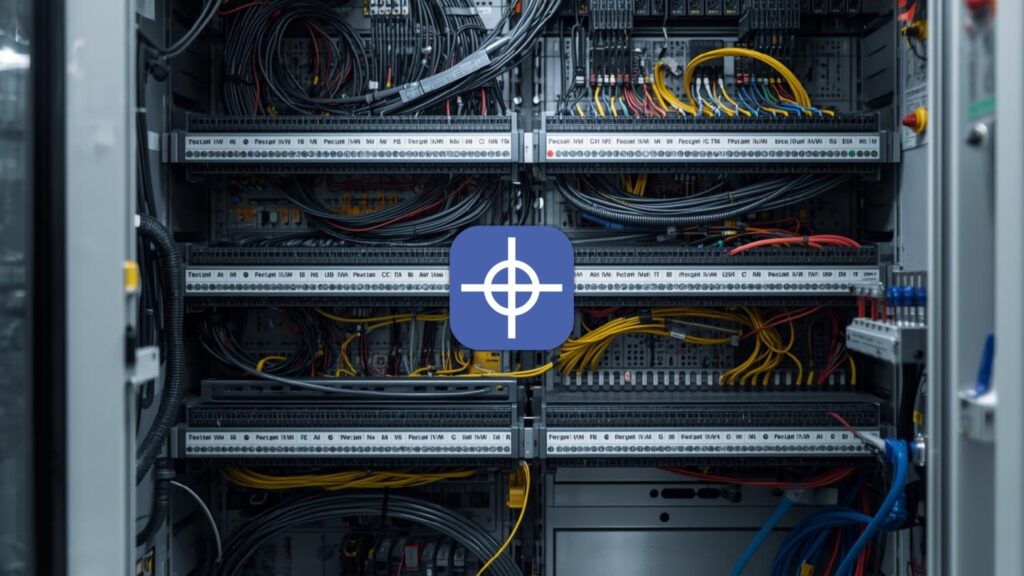
Wire tags—also called Wire Tag / Wire Marker / Cable Marker—are the practical foundation of cable labeling and wire identification in electrical panels, industrial machines, CNC builds, automation lines, telecom cabinets, and building systems. A correctly implemented tagging system makes every conductor traceable, readable, and standardized—so you can immediately confirm where a wire comes from, where it goes, which circuit/terminal/PLC I/O it belongs to, and what its function is.
In real-world panel building, this is not “nice to have.” It directly reduces wiring mistakes, speeds up troubleshooting, improves safety, and keeps documentation aligned with the installed system. General principles for terminal and conductor identification are discussed in standards such as IEC 60445 (general rules for identification/marking of terminals and conductors, including the use of colors and alphanumeric identifiers).
Main Applications of Wire Tags (Practical, Industrial Use)
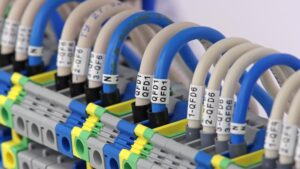
- Reduce wiring errors and speed up troubleshooting: When a sensor input or relay output fails, correct wire tags let you trace the route quickly—without guesswork.
- Increase maintenance speed and reduce downtime: Technicians go straight to the right terminal and wire, shortening repair time and stoppages.
- Improve safety: Clear identification reduces miswiring and helps prevent dangerous mistakes during work on power/control circuits.
- Match drawings and documentation: Tags should be consistent with electrical schematics, cable lists, terminal lists, and PLC I/O lists.
- Serviceability and future expansion: Adding modules, changing PLC hardware, or upgrading a machine becomes far easier when a structured naming standard exists.
Types of Wire Tags (Practical Classification)
1) Sleeve Markers (Sleeve Markers)
A tubular sleeve or ring that sits on the wire (before or after crimping). Ideal for panel wiring and conductors exposed to frequent handling or contact.
- Strength: High durability; difficult to slip off.
2) Clip-On Markers (Clip-On Markers)
Small plastic markers that clip and lock onto an installed wire.
- Use case: When wiring is already in place and you do not want to remove the conductor.
- Strength: Fast installation.
- Limitation: Fit can be sensitive to wire diameter and cable flexibility.
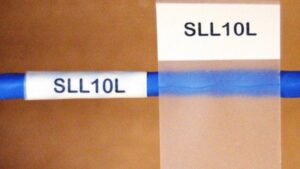
3) Wrap-Around Labels (Wrap-Around Labels)
A narrow label that wraps around the insulation and adheres.
- Common in: Thin-to-medium wires, especially where label printers are used.
- Note: Self-laminating variants add a clear overlaminate that covers the print and improves chemical/abrasion resistance.
4) Heat-Shrink Markers (Heat-Shrink Markers)
A printed heat-shrink sleeve that contracts with heat and grips the wire tightly.
- Best for: Long-term durability in vibration, oil, dust, and challenging industrial conditions (dependent on material and print quality).
- Common in: High-reliability industrial panels, automotive, and high-vibration environments.
5) Flag Labels (Flag Labels)
A label that forms a “flag” next to the wire: one part wraps and sticks, and a raised area carries the text.
- Best for: High readability from a distance—useful in crowded ducts and dense control/network wiring.
6) Cable Tags for Multi-Core Cables
Used to identify the cable itself (not individual conductors), typically placed at both ends.
- Materials can be plastic, metal, or rugged industrial labels.
- Often fixed with nylon ties or stainless-steel banding depending on the environment.
7) Metal / Stainless Tags for Harsh Conditions
For high temperature, strong UV, chemical exposure, or outdoor use (depending on design and marking method).
- Common in oil & gas, mining, power generation, and harsh industrial sites.
8) Smart Tags (QR / RFID) — in Large Projects
Used to link the tag to maintenance databases/CMMS, service history, or digital documentation.
- Common in asset-management-heavy sites and large industrial facilities.
Methods for Printing/Marking Wire Tags
- Pre-printed (ready numbers/letters): Fast and economical for repetitive panel builds.
- Thermal transfer printing (Thermal Transfer): Very common in automation; good readability and durability (depends on ribbon and material selection).
- Laser / industrial inkjet: Used in certain systems for higher volumes.
- Handwritten (marker/pen): Only recommended for temporary work or small projects (lower durability and readability).
Industrial note: if marking durability is tied to safety/quality, standards, and industrial evaluations emphasize label permanence and performance. UL 969 is a well-known standard for Marking and Labeling Systems and is commonly referenced for durable labeling requirements.
What Information Should a Wire Tag Include?
Depending on the level of standardization in your project, a wire tag may include:
- Wire ID/wire number (Wire ID) — the most important element
- Source and destination (example: from X1:13 to DI0.5)
- Cable number and core number (for multi-core cables)
- Signal/function name (for example: “HOME_X”, “ARC_OK”, “THC_UP”)
- Voltage level or circuit class (power/control/safety/network) when required
- Drawing reference (page/line reference) in larger projects
Standards and Organized Naming
A structured wire-tagging system typically aligns with established identification, naming, and material requirements seen in industrial standards, including:
- IEC 60445: General rules for identification/marking of terminals and conductors, including use of colors and alphanumeric identifiers to reduce ambiguity and improve safety.
- IEC/ISO 81346: A framework for a Reference Designation System used to name/identify parts of industrial systems. This series replaced the older IEC 61346 set.
- IEC 60695-11-10: Fire hazard testing methods for electrotechnical products’ polymeric materials—horizontal/vertical flame test with a 50 W test flame.
These references do not mean every wire tag must “comply with all standards.” They show that industrial projects typically consider identification rules, marking durability, and material behavior based on the application environment.
Choosing the Right Wire Tag: Quick Checklist
- Work environment
- Inside a clean/dry panel, or in oil/dust/vibration/heat?
- Wire/cable diameter and available space
- Duct space and proximity to terminals affect whether flag or sleeve styles are practical.
- Expected service life
- Temporary (commissioning) or permanent (multi-year operation and handover)?
- Printing method
- Do you have a thermal/label printer, or will you use pre-printed markers?
- Readability requirements
- Viewing distance and access angle matter (flag labels usually win here).
- Documentation alignment
- If you use electrical design tools (e.g., EPLAN, AutoCAD Electrical), generate marking lists directly from the official project outputs and print using the same structure.
Best Implementation Practices in Panels and Machinery (Recommended Procedure)
- Define a naming standard before wiring starts
Example structure:
- Cables: C-###
- Cores: C-###-##
- Single wires: W-####
- Synchronize with terminal lists and PLC I/O lists
- Print and install tags before crimping (if using sleeves/heat-shrink)
- Tag both ends of a run
For cables and critical conductors, both ends should carry the same identifier. - Final verification
Do spot checks by matching a sample of runs against drawings, then approve the panel as a whole.
Common Mistakes (and How to Prevent Them)
- Two IDs for one wire, or one ID used for two wires
- Prevention: enforce unique ID rules and validate before handover.
- Tag location is hidden in ducts or too close to sharp bends
- Prevention: define a standard placement location (near terminals, with safe distance from crimps and bends).
- Using non-resistant labels in oily/hot environments
- Prevention: select heat-shrink or higher-resistance systems and follow manufacturer specifications.
- Mismatch between tags and drawings
- Prevention: generate tags from official project lists/software outputs—not manual entry.
Contact Radonix or use the chatbot in the bottom right corner to learn how linear encoders integrate with Radonix control systems.
For industrial implementation, explore Radonix PC-based CNC controllers, control software and machine-specific HMI systems. Radonix PC-based CNC controller systems.